Change of pace
I spent last night with three friends and a dog at Sanctuary, a 24-hour arts festival in the Galloway Forest Dark Skies Park. Unfortunately we were under several layers of cloud, so there were no stars to be seen (though apparently on a clear night, the Milky Way is visible), but in some ways the way the heavy skies intensified the darkness added to the atmosphere. We drove down in a state of increasing hysteria, clouds low on the hills and isolated houses giving the whole thing a sinister feel, and before too long literally everything that came out of our mouths sounded like a scripted line from an extremely self-referential horror film. Happily we avoided being murdered, and spent a cheerful and bemused few hours stumbling through muddy fields, Looking at Art. The definite highlight for me was Yann Seznec’s Ritual, which paired lit candles with recordings of people’s prayer requests: my friend and I blew out all the candles but one and squatted silently in the tent for five minutes, listening to a man requesting prayers for his ill uncle. I also loved Martin O’Neill’s Will o’ the Wisp: a simple idea (projected words + smoke) that felt properly magical – and Hide, which let us listen to forest sounds through headphones; this was particularly atmospheric as it was set quite far away from the rest of the festival, requiring a long, lonely walk down a boggy path lit only by our torches, moving slowly towards a little circle of fairy lights in the darkness.
Things are changing a little around here. After many years of living abroad, and the last three years of extreme peripateticism, I have enrolled in a masters’ degree at Glasgow University and am seeing how it feels to be at home for a while, staying in one place, living in the place where I have theoretically lived since early 2011, but where I have probably never spent more than a maximum of three weeks at a stretch. I got back just over a week ago, after six weeks or so of backpacking around South East Asia and the Pacific (posts, possibly, forthcoming), coming right on the back of the Camino (ditto), and I am vacillating wildly between the novelty and excitement of not having to go anywhere, getting to have a routine and make plans weeks in the future because I know I am going to be here – and a predictable sense of dislocation and confusion and loss of identity: because if I am not bouncing around dangerous places and working on the floor of airports and scraping adventurous holidays out of conveniently located long weekend, who even am I? Right now I am quite enjoying the discomfort of it, watching my reactions with a degree of detachment, but a number of my friends have predicted that I will have a full-blown freak-out sometime in the next six to eight weeks. We will see.
I’m going to try and use this blog as a way of focusing myself on exploring my city and my country in a way that I’ve always (claimed I) wanted to, but have never actually managed. Perhaps not so exciting and glamorous as the itinerant existence I’ve had for the past several years, but novelty is novelty and exploration is exploration, even if the scale is somewhat different. We will see how it goes.
Camino, two weeks in
Rest day in Burgos, because it is also my birthday and some sort of festival here, which has involved teams of marching bands roaming through the town and people parading in giant costumes and huge explosions of confetti in the main square. My friends have dubbed it Jesstival and it is therefore the best.
As of yesterday’s arrival in Burgos, I had walked 286km, with 492.5km to go, and I am officially 36.74% of the way through. (Yes, I have a spreadsheet, because I am a colossal nerd.) I hadn’t planned to take a rest day here but checked into a reasonably decent hotel as a pre-birthday treat and promptly washed all my clothes in the bathtub before realising that they weren’t going to be dry in time for a 6am departure. And then I went for a little wander around Burgos and it turned out to be absolutely lovely; I had been inwardly bracing myself for an unpleasant re-entry into urban life after a week or so of village to village walking post Logroño, but it’s been much more pleasant than I had expected. Had to do a bit of work to repress my internal sergeant major, which was bellowing at me the REST IS FOR THE WEAK, YOU MUST MARCH 31K INTO THE MESETA AT DAWN, but I managed to wrestle it into submission and thus here I am. And I will march 31k into the Meseta at dawn tomorrow, instead.
I am – obviously – not quite halfway through; I’m estimating another three weeks to go, and will obviously need to pick up the pace somewhat, but I’m feeling stronger by the day and more able to go longer and longer distances. I’ve also had a couple of mishaps in the past couple of weeks that have required me to do shorter days – one possibly-infected blister in Logroño that caused my foot to swell up so much I could barely put my shoe on; and one twisted ankle (and skinned knee) after literally falling out of a bar in Grañon. As long as I avoid such mishaps in future, I should still be on track to arrive in Santiago somewhere around the 13th or 14th of July.
Camino thoughts, two weeks in:
- Here is a piece of advice I have not seen anywhere else: be careful in choosing what shoes you bring to change into once you’re done walking for the day. I chose to bring a trusty (OR SO I THOUGHT) pair of Ipanema flipflops which I’ve had for years, and which promptly gave me blisters between my toes, which were then exacerbated by the walking and caused me to be hobbled in Logroño. I’d never had any trouble with them before but assume that the skin on my feet is more sensitive after I’ve walked 25km than it would normally be.
- I may have said this before, but oh my god silicone earplugs are an absolute GODSEND and I couldn’t do without them. They block out street noise as effectively as they block snoring, and helped me to sleep until the grand old hour of 9am this morning.
- Choosing the right listening material is an art. I find myself a little too emotionally raw while walking for all but the most austere music, and as such have been listening to a lot of Tallis and Palestrina and their ilk. I’ve also finally – FINALLY – been getting into podcasts – mostly The Moth, and various Guardian podcasts, including the books podcast, which caused me to squat down under a tree in the middle of an industrial area yesterday afternoon and immediately purchase about £30-worth of ebooks. So there is danger here, too.
- I am finding the social aspect of the Camino, frankly, a little hard to handle. This walk is an essentially solitary experience for me, as for many others; for some, however, it seems to be very social, and I have seen a number of tight groups springing up along the way as people band together to walk. I would, honestly, be quite happy with my own decision to walk alone, socialise in albergues, form fleeting connections with people I spend a couple of hours with and never see again, and so on, if I didn’t have the creeping sensation that I am Doing It Wrong and should be fully bonded into a Camino Family by now. ‘Twas ever thus.
Camino de Santiago: Six days in
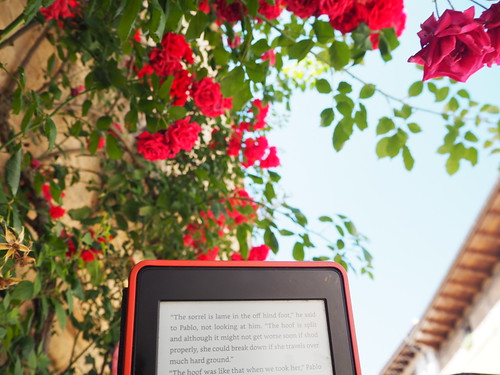
I didn’t intend to take a rest day this early on, but I have a massive backlog of freelance work and wasn’t making immense amounts of progress while typing frantically in dim dorm rooms surrounded by people napping, so I decided this morning to stay in Puente la Reina, where I have a very comfortable single room, and lock myself in until my To Do list is decimated (in the figurative rather than literal sense – a 10% reduction would not be great progress). Which means that I may end up sleeping remarkably little tonight, but then tomorrow all I have to do is walk 22km or so to Estella in the morning, and once I am there I can nap with an easy heart because I will have nothing hanging over me. Which sounds blissful. And at least in Navarra there is a regular supply of coffee vendors along the route.
Anyway! I am six days into the Camino de Santiago; the day of the UK election (and what a farrago that has been) I got up early to vote, taxi’d to Glasgow airport, flew to Paris, got the bus to Montparnasse and the train to Bayonne through flickering lightning (six days ago – feels like about six months), and the next day I got the train to St Jean Pied de Port and started walking. So far I have walked 91.5km, shortly under 160,000 steps; I have crossed one mountain range and one national border; I have slept in five different places (Orisson, Roncesvalles, Larranoaña, Pamplona and here) and drunk bucketloads of coffee and red table wine. So far I have only lost two items: a hat, in a forest between Linzoain and Zubiri; and a fleece, yesterday, because I neglected to consider that something that is very securely strapped to one’s pack when said pack contains a Platypus with 3l of water becomes much less secure when said you’ve drunk pretty much all your water. Going to have to buy a replacement hat because it is scorchio; the fleece feels much less necessary right now but no doubt in a week or two I will be chilled to the bone and bemoaning its lack. The loss of two items is not bad going by my standards, though when considered as a proportion of the items I have with me it is … less good.
According to my semi-obsessive spreadsheet I am only 11.75% done, so it is very early days, but some observations so far:
- My body is coping much, much better than I thought it would. I had been expecting problems with my right ankle*, right knee and hips, as they’re the bits that generally start to feel creaky after a strenuous hike, but they’ve all been absolutely fine. Likewise my feet – gallingly enough, I only have a single blister, and it’s from the flipflops I brought to change into once my walking is done for the day. Ipanemas, how can you betray me like this?!
- I’m also coping much better than expected with having to carry my pack. It’s somewhere between 8 and 9kg I think, so more or less 10% of my body weight, as advised, but I still thought I would struggle. But no! I have had occasionally achy shoulders at the end of a day’s walk, and sporadically twingey back muscles, but otherwise I’m totally fine. (Famous last words, probably.)
- I am coping about as well as expected (i.e. not at all) with the heat. The temperature up until about midday is pretty perfect, but afternoons can be brutal, peaking around 3pm when the earth feels like it’s radiating all the heat it’s been absorbing right back up at you. Yesterday’s walk from Pamplona to Puente la Reina was almost exactly the opposite to how I’d expected in terms of difficulty: I normally hate relentless uphill slogs, and so had expected to find the stretch from Pamplona to Alto del Pérdon really tough; instead, it was a breeze – I strode up to the top of the hill much faster and more happily than I would have dreamed, and then really suffered through the downhill stretch – 8km or so, should have taken me two hours, but ended up being more like three and a half because I had to stop and lie down and recover from the heat at every given opportunity. It’s supposed to be cooler tomorrow for a couple of days, but I’m getting up earlier and earlier to try and beat hte heat, and may end up entirely nocturnal at this rate.
- I’m not reading nearly as much as I thought I would, which is a bit sad; I blame my prolific journalling (which isn’t going to change) and my backlog of work (which hopefully is). In Bayonne I started reading The Ethical Carnivore by Louise Grey, on a friend’s recommendation, which I then put aside in Orisson in favour of Obabakoak by Bernardo Atxaga, on the basis that I should really read a Basque author in the Basque country, which I then put aside in Pamplona in favour of Hemingway’s For Whom the Bell Tolls, because obviously. All three are great and I should (and will) finish them, but right now I’ve been distracted by VE Schwab’s Our Dark Duet, which came out yesterday.
- Items that I am most thankful for so far: Smartwool socks; my new 25l Berghaus backpack; my Platypus hydration system; the John Brierley Camino guide.
Highlights so far:
- Waking up to a valley full of mist in Orisson, and hiking across the Pyrenees (Day 2).
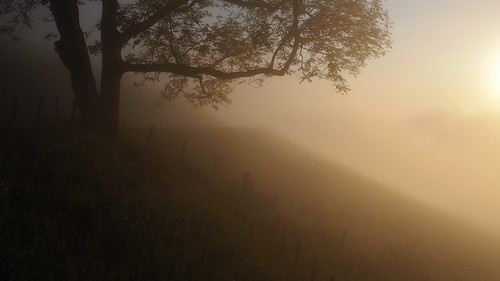
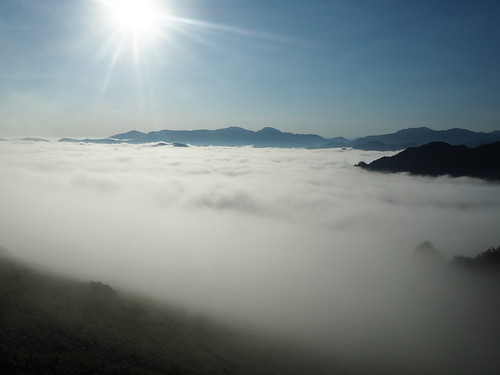
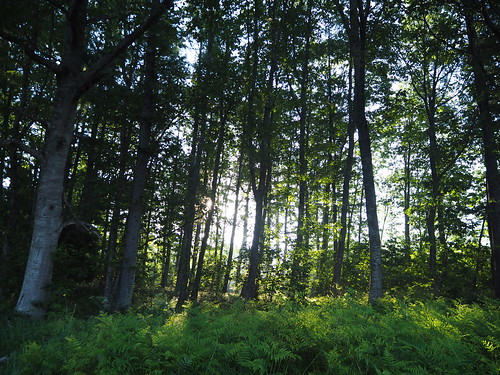
- Early morning walk through the witchwoods between Roncesvalles and Buergete (Day 3)…
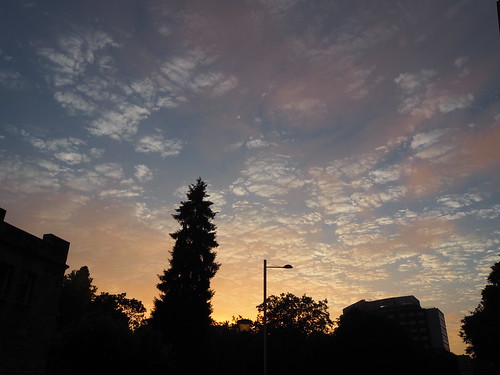
- Walking out of Pamplona yesterday morning (Day 5) under a stunning dawn sky, followed by…
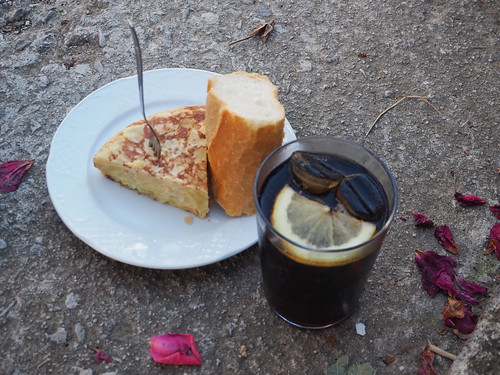
- Breakfast at Zariquiegui, after an uphill hike, sat on the side of the road under a wall of roses, followed by…
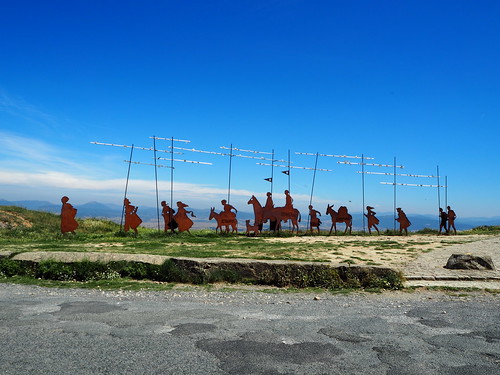
- The pilgrim monument at Alto del Pérdon, set amidst wind turbines (one of my all-time favourite things), and then…
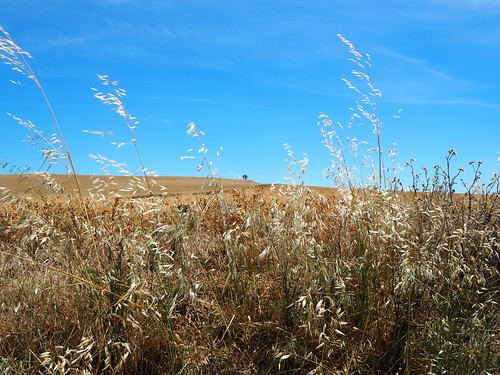
- Honestly I just really like this photo, taken somewhere between Uterga and Óbanos yesterday afternoon, while I was dying of heat.
*Sprained in ten years ago when, while emotionally elevated, I fell off a step in a nightclub and continued to dance for hours, and it’s returned to trouble me in my old age. The follies of youth.
Another election eve post…
…but I don’t have anything particularly profound to say, having had my heart repeatedly smashed to pieces by first the 2015 General Election, then Brexit, then the US Election over the past two and a bit years. The other day I permitted myself about five minutes of roseate fantasy of May defeated and the left victorious, and was surprised by how wistful it made me feel. Perhaps I have a tiny vestige of hope remaining inside me after all?
But irrespective of tomorrow’s results, today marks the end of a small, personal era, as my last day of full-time work with the company I’ve been working for over the past three years. It has been truly brilliant, and has given me many, many amazing opportunities – but I am constitutionally unsuited to full-time employment, and it is more than time for a break. So a break I am having, followed by a change. I hope both will be revitalising.
More soon. In the meantime:
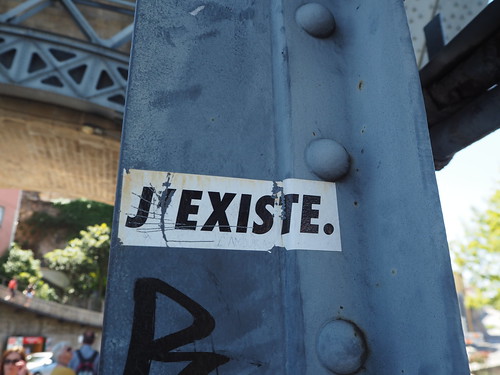
(From Porto, where I was a month ago.)
o hai
I’ve been in a lot of places and read a lot of things lately but to try and get back in the swing of writing blog posts I’m just going to blat on about YA books I’ve loved lately, and YA books I’m excited about. There’s no need to recap my rant about why adults reading YA books is totally effing normal and doesn’t make us emotionally or intellectually stunted, right? Right! Besides, what with the impending apocalypse and all, we may as well just read as our hearts tell us to, and leave joyless, worthy reading for the afterlife.
- Obviously anyone with even the most tangential interest in YA lit and who is not a complete asshole will have already read Angie Thomas‘s The Hate U Give, but in case you have been in a coma for the last several months or possibly held captive by militants, allow me to urge you to READ THIS BOOK IMMEDIATELY. I first heard about it when Leigh Bardugo reblogged this tumblr post, which accurately points out the lie that is often peddled by the publishing industry that there just isn’t a market for literature by minority voices. Plenty of people more eloquent than me have pointed out what makes The Hate U Give so incredible, but I will say that for me, the most intense and transformative part of the reading experience was that the book made no concessions to my whiteness. It’s a book by a black woman, steeped in black (American) cultural references, about what is, tragically, an essentially black experience, and there’s no attempt to soften or tone anything down for a casual white reader. It’s telling of how pervasive whiteness is in the dominant cultural narrative that I can’t actually remember if I’ve ever experienced that in a book before – certainly not in YA. 12/10, would recommend x 100000.
- Laini Taylor‘s new book, Strange the Dreamer, could hardly have been more different, but it was another book that grabbed me by the heart lately. I read Taylor’s Daughter of Smoke and Bone books in a big breathless gulp in late 2014, while driving through Armenia and Nagorno Karabakh and finally on a random layover in Sharjah, and I adored the books for what they were but also, and perhaps more so, for the utter delight in the world that Taylor infuses throughout them. Strange the Dreamer is more otherwordly in scope, not even touching on our world, but Taylor has crafted something truly exquisite in her worldbuilding, notwithstanding its brutality. Cannot wait for the next in the series.
And now for some YA books that I am eagerly anticipating:
- VE Schwab‘s Our Dark Duet is out in a couple of weeks! It’s the sequel to This Savage Song which I bought on a whim and read in Entebbe last year. Sadly I think this is the second and last in the series but Schwab is astoundingly prolific and will probably have ten more books out by Christmas. IF THERE IS A CHRISTMAS, see: apocalypse, see: covfefe.
- Maggie’s Stiefvater‘s All the Crooked Saints is out in October! (In the US, anyway; not sure about the UK.) There is an excerpt here and it makes me happy.
In unrelated conclusion, here is a very pleasing photo of me from a couple of weeks ago, after I arrived at Conoco airstrip and was driving into Garowe the morning after it had rained heavily for the first time in years, thus alleviating the drought. There were great shallow lakes by the side of the road and when he saw me taking photos my driver Abdifatah insisted we get out so he could take a photo of me in front of one of them. Full disclosure: said photos were so grotesquely unflattering that I deleted them instantly, but this delighted selfie of Abdifatah with me in the background makes me smile. (Shortly afterwards we drove through two feet of water flowing with alarming speed from one side of the road to the other, and although we made it safely to the other side, I had to use a different car for the rest of the trip because the electricity fused.)
DRC Easter
HURRAH IMPROMPTU TRIPS. A few weeks back one of my Nairobi-based friends mentioned that she had a six-month multi-entry visa from a work trip to Kinshasa and Kisangani, and did anyone want to help her make use of it by climbing Nyiragongo Volcano? Some friends of mine did the same trip last year and the pictures looked AMAZING so I was like HELL YES and then (quietly, secretly) started fretting, because as you may recall, last year I tried and failed to mount an assault on Karthala, a volcano in Comoros, and so what if I tried again and failed again but this time in front of friends thus a) embarrassing myself, and b) inconveniencing them when I inevitably had to be stretchered off the mountainside? But then the trip took on a life of its own, with three more friends / friends-of-friends committing, and then we set dates and applied for visas and booked tours and I borrowed a bagworth of hiking gear off a friend (who was much more sensibly going to Istanbul for Easter weekend) and I was borne along by the momentum. And so on Easter Friday, the day after I came back from Watamu, we flew to Kigali, and the next day we piled into a car and were driven to Goma.
Goma was fascinating and I wish we’d had the chance to spend more time there. We stayed at the Caritas Guesthouse, right on Lake Kivu, which I’d last seen from Gisenyi in 2015. Goma’s main claim to fame, aside from its regular bouts of M23-related insecurity, is the fact that it was nearly swallowed by lava when Nyiragongo last erupted, in 2002. Relatively few people were killed (according to our fixer, Emmanuel, those who died were mostly either holed up in a church that promised to pray the lava away, or looting a fuel station that then exploded), and the volcano is now, apparently, much better monitored so there will be early warning for the next eruption. But volcano remnants are still very much in evidence, in the form of pitted lava rocks piled up by the side of the road, or used in construction.
The volcano had been our main aim, but despite how short our time was, various logistical arrangements meant that we ended up with a day in hand, and Virunga was offering half-price gorilla trekking for Easter (didn’t know gorillas cared), so we took advantage of that and on Sunday spent a couple of hours bouncing about through achingly picturesque countryside (conical volcanoes hidden in the mists; exquisitely-kept terraced farms in the foothills) en route to Bukima. This was something that I’d been wanting to do for years and years, and it was absolutely incredible – and, as we agreed at the time, intermittently terrifying. Unlike what I’ve heard about gorilla “trekking” elsewhere, this was a proper, strenuous hike through the rainforest, two hours of slogging uphill, with our guides hacking through the bush for the last ten or fifteen minutes before we were encouraged through a gap in the greenery and suddenly there was a gorilla RIGHT THERE OH MY ACTUAL GOD. We got to hang out with a family group of nine gorillas – including three silverbacks – for an hour, and it felt like an immense and unwarranted privilege, interspersed with periods of intense terror when one of the silverbacks would lumber to his feet, fix us with a stern eye and lurch in our direction. We had been assured that in these cases our guides would know what to do, and were particularly adept at identifying when the gorillas were just playing (oh god) and when they were actually angry (OHGODOHGOD); Frederic, our main dude, generally responded to any potential gorilla aggression with pas de probleme, pas de probleme, and then: prend un photo! which we mostly did, when our hands weren’t shaking too much.
And then Monday was VOLCANO DAY. I had spent the previous few days silently performing my affirmations (you failed at Karthala because you were trying to do a two-day hike in one day! It’s only 8km (albeit with a 1500m elevation climb)! It’s all psychological!), and with my friends giving me very useful encouragement and tough love. In the event, I would by no means say it was easy (my thighs still ache slightly, four days after coming down), but it could not have been more worth it. This blog post gives an excellent description of the route (I may have read it slightly obsessively before departure), and the trek is planned incredibly well, in terms of the way that it’s broken up. I found it reasonably tough but OK right up to the second half of the penultimate stretch, when a very heavy rainstorm and the unrelenting steepness really began to get to me – but by that point I was a good three-quarters of the way there, and so there was no way I was going to give up. I was encouraged to the end of that stretch by one of my friends waiting uphill from me with a bite of Snickers in her hand, which she smashed into my mouth as soon as I reached her, before hustling into a hut to shelter from the rain. And then onwards to the summit once the rain had let up a little, which was physically difficult (probably the steepest and most perilous stretch of all) but psychologically straightforward, as by that point the end is literally in sight.
And then a night on the rim of a volcano, allegedly the world’s largest (or maybe second-largest) lava lake, drinking wine and whisky out of plastic cups and eating a surprisingly delicious meal, made by our stalwart cook, Janvier; the lights of Goma and Gisenyi spread out on one side; the crater on the other; shreds of clouds beneath, and Mount Mikeno poking its way through them. The whole thing shot instantly to one of my top five ever travel experiences.
Fly-by: Watamu
In Nairobi after a few days on the Kenyan coast, at Watamu. My companion and I took advantage of a delayed trip to Puntland on my part, booked last minute flights and an airbnb, and took ourselves away for three days of whatever the opposite of a staycation is.* Much to the surprise of both of us, we got a startling amount of work done: never underestimate the motivating factors of a) all your friends thinking you’re just off on a jolly, and having to prove them wrong, and b) having pool, beach and dawas within easy reach, to act as regular rewards.
Things that the trip involved:
- So much good food. We lunched at Pilipan once (marinated calamari, shrimp and mango noodle salad, salted caramel chocolate tart), at Papa Remo once (fish carpaccio, crab linguini), and dined at the Crab Shack twice (highlights being the crab – obviously – and the jumbo prawns, but also the whole atmosphere, the dawas – made by the “dawa doctor” – and watching the sun go down). Highly recommended.
- Possibly too many dawas, despite attempting to impose limits upon ourselves.
- Delicious gelato, bought en route to the airport, having made a gelato-specific detour because it was apparently good enough to be worth missing your flight for (accurate) – and then eaten messily in a tuktuk.
- One of the best massages of my life at Lakshmi Spa, followed by re-enacting the Timotei advert between work emails in their tiny outdoor jacuzzi.
I am back in Nairobi just in time to have dinner with friends in Karen, go for a run while dodging warthogs, throw a lot of filthy clothes into the wash, repack, and then head off to the airport again for the next thing. Of which more later, once it’s actually happened.
*By which I mean going somewhere lovely, specifically to work. Facebook consensus was that the most appropriate term was Remote Office or Mobile Office, though one friend did suggest the excellent “Holi-job”.
Somalia/Somaliland, last week
I have been trying to write this post for two days now, about my recent trip to Somalia and Somaliland (which was, from my perspective, great), and how I’m now reading Nadifa Mohamed’s Orchard of Lost Souls, which is set in Hargeisa in the late 1980s, and how the Horn of Africa is currently experiencing the worst drought in several years and a boat full of Somali refugees was recently fired upon by a helicopter in the Gulf of Aden and and and, but I can’t stitch it together into a coherent narrative. So I’m just going to post some pictures instead.
The view from the tea shack at Conoco Airstrip, where flights land for Garowe as they’ve been upgrading their airport for about nine months now. Garowe was hot and windy and bright, and I very much missed the swank sunglasses I bought last year and then lost in the workings of my seat the one time I was upgraded on Kenya Airways.
I think I have said before that one of my favourite things about Somalia and Somaliland is the paintings you find on shops and hotels and restaurants, usually advertising their wares, but in this case exhorting people to comply with security restrictions. (This was at the City Plaza Hotel in Burao, where we also met – briefly – eminent Somali poet Hadrawi.)
The road between Berbera and Burao starts out flat and dusty, and then suddenly you are coiling up into the Golis Mountains and the temperature drops and you get vistas like this.
The beach at Berbera is beautiful and I wanted to swim but the sea was rough and the sand turns to rock as soon as you’re up to your ankles and women swimming in Somaliland is a vexed issue anyway and as such I was fully covered and had nonetheless sparked consternation and mild alarm among the hotel staff when I walked down to the beach, so I had to content myself with an aggressive paddle.
We left early from Berbera to head back to Hargeisa in time for our flight, and were very surprised to find the road covered in heavy mist rising off the desert and clinging to the base of the mountains.
Some places I’ve been; some books I’ve read
In early December, Clare and I went to Iceland with a small list of things that we wanted to achieve: 1. Dive Silfra; 2. Visit Jökulsárlón (something that’s been on my List for years); 3. Visit an ice cave (and lick it, though we didn’t know we would want to do the latter until we were actually inside); 4. See the northern lights. The entire trip was a crashing success, with items one through three achieved in good time, as well as achieving various other goals that we didn’t even know we would want to do until we did them (hammer a nail into a canvas at a Yoko Ono exhibition! Eat putrefied shark and then a massive pot of fondue to get rid of the taste! Touch a very fluffy Icelandic horse! See a lunar rainbow!) AND THEN as we were congratulating ourselves for an A+ trip, with the ever-unreliable northern lights as our only failure (and not through want of trying), our flight back to the UK was delayed by just enough time for the sky to clear and the northern lights to announce themselves about half an hour into the flight, whereupon EasyJet dimmed the cabin lights and everyone rushed over to the lefthand side of the plane with their noses pressed to the windows and a temporary but beatific sense of aurora-based camaraderie spread through the plane. ICELAND YOU ARE MAGNIFICENT.
On our last night we pushed the metaphorical boat out and booked into the Silica Hotel near the Blue Lagoon. Silica has its own private lagoon, which is open until midnight, which means that when we arrived, after an epic journey from the southeast of the country and fresh from licking glaciers, at 10pm, we were able to get changed and immerse ourselves immediately. One of my happiest memories of the trip is of floating on an inflatable ring in the milky water under a light rain, reading Sjón’s From the Mouth of the Whale by Kindlelight. (Good, but not as good as The Blue Fox, which is gorgeous.)
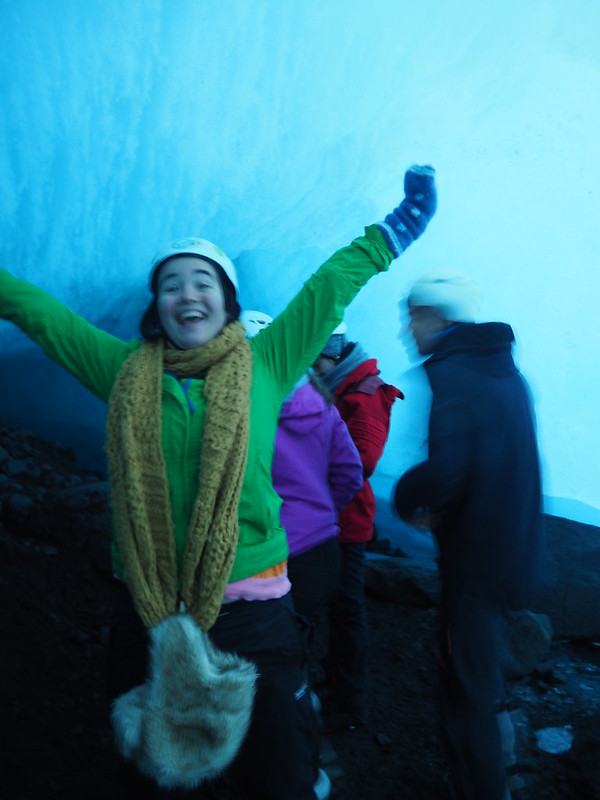
The happiest person to ever enter an ice cave
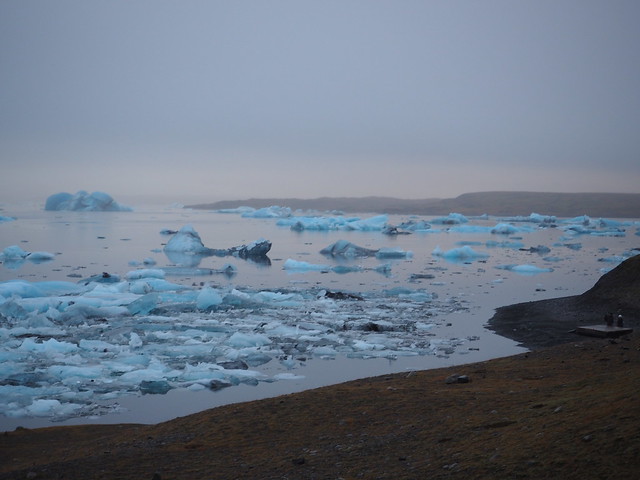
Jökulsárlón
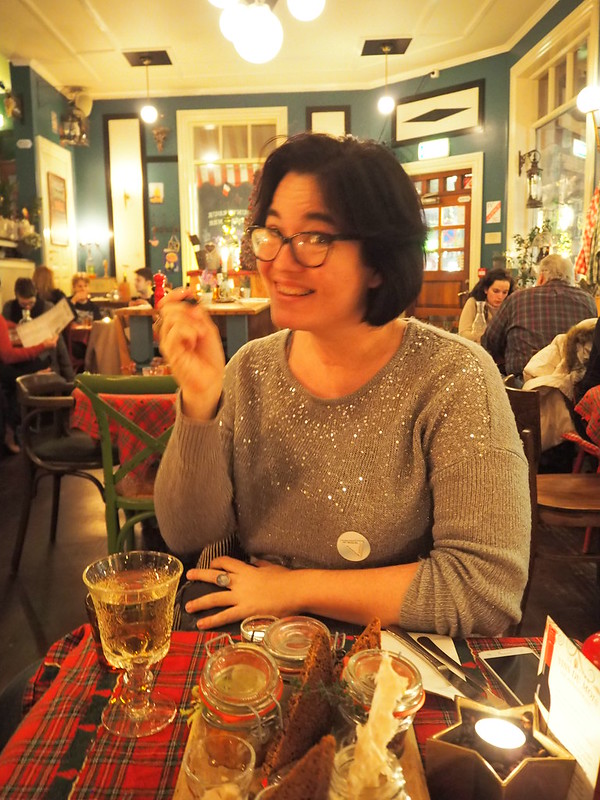
Putrefied shark, which I am mostly glad to never have to try again. Sorry, vikings.
*
At the end of December, I went to the end of the train line in rural Belgium for a new year’s eve wedding. It was minus five degrees but the air was clear as a bell and we were staying in an old monastery with an enormous fireplace that powered all the heating and hot water. On the morning of the wedding, which was also the final day of the year, I went outside for a wander in nothing but a dress, no coat, cup of coffee in my hands; everything was bright and frozen, as if the whole world was suspended.
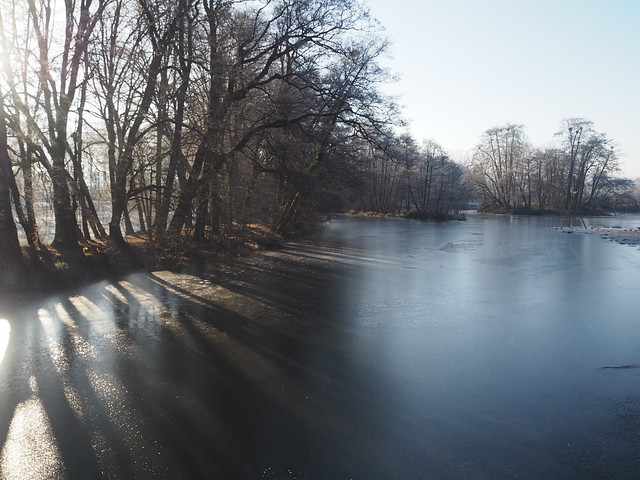
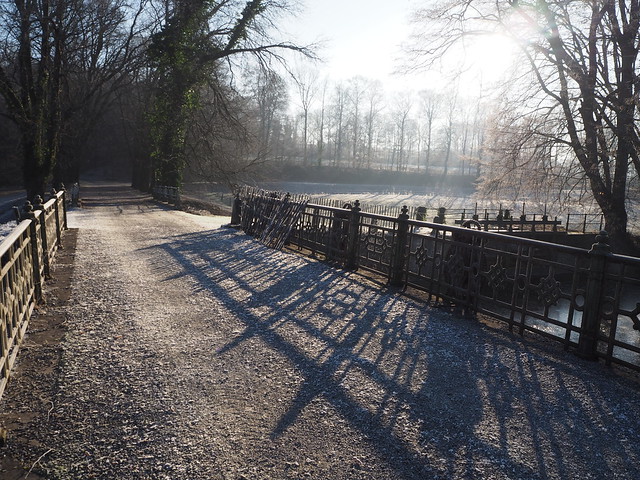
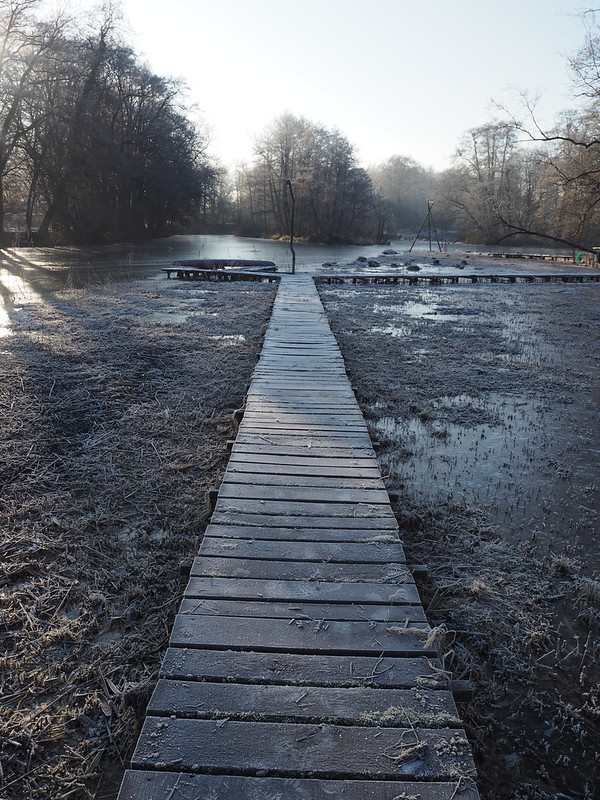
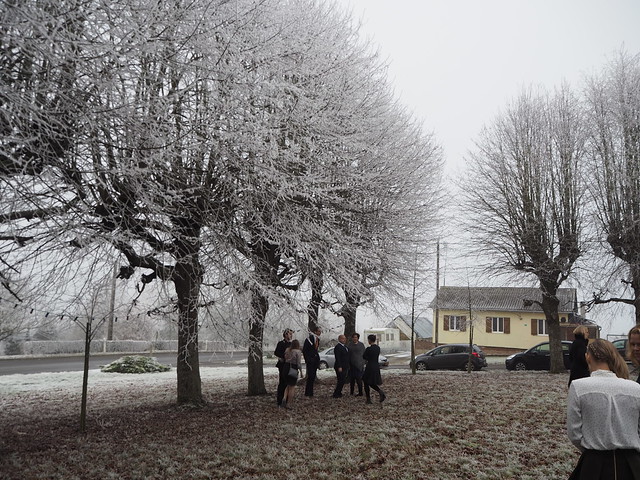
We piled into a fleet of cars to drive into France for the wedding ceremony, in a tiny village where the bride’s uncle was the mayor. As soon as we crossed the border the mist rolled in and when we had photos taken in the village green the leaves underfoot were crisp with frost. I read Scott Lynch’s Locke Lamora by fires, on trains, in bed with the lights out.
*
In late January I went to Sierra Leone for one of the more stressful work weeks of my life. I barely read, but when I did it was Kenji Yoshino’s Covering, which had been recommended to me in Boston late last year. I walked on the beach and drank Star beer with friends and colleagues and lost my lovely replacement Mille Collines cardigan thing, exactly a year from when I lost the first one, also in Freetown. I passed by Paris on my way home, and had a single morning of sight-seeing, which I spent lurking like a goddamn gothic in Montparnasse Cemetery.
*
In late February I had a work-related delay which meant I had an unexpected piece of dead time and so I looked for places that I could go that a) were one (inexpensive) flight from the UK, b) didn’t require a visa to be arranged in advance, and c) I hadn’t been to before. Thus: six days in Cape Verde, serendipitously arriving for Carnival. I bounced between the islands of Sal, São Vicente and Santo Antão, went for four dives and saw my first shark, hiked down from a volcanic crater through heavy mist, ate plenty of delicious food, watched various Carnival shenanigans, listened to live music, read the entirety of Mira Grant’s Newsflesh books, and got mugged once, but that was a small price to pay.
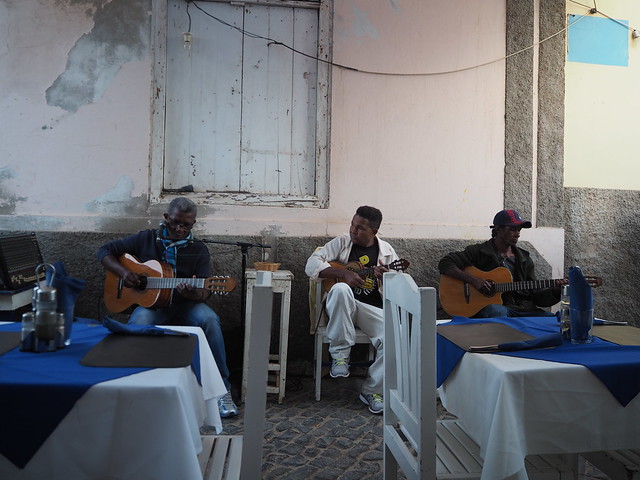
First night in Santa Maria
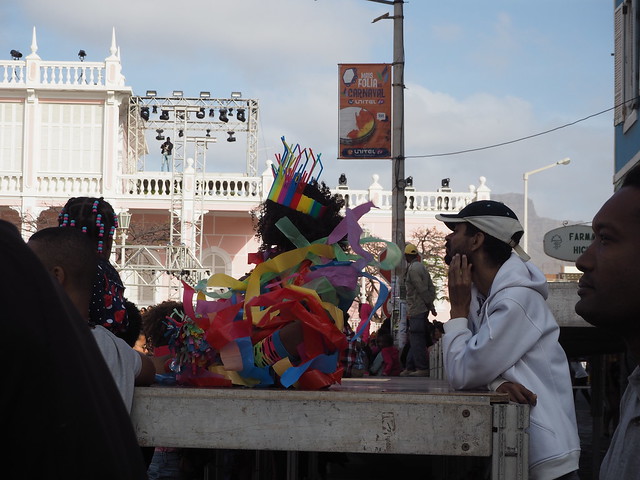
Watching the Carnival parade, Mindelo
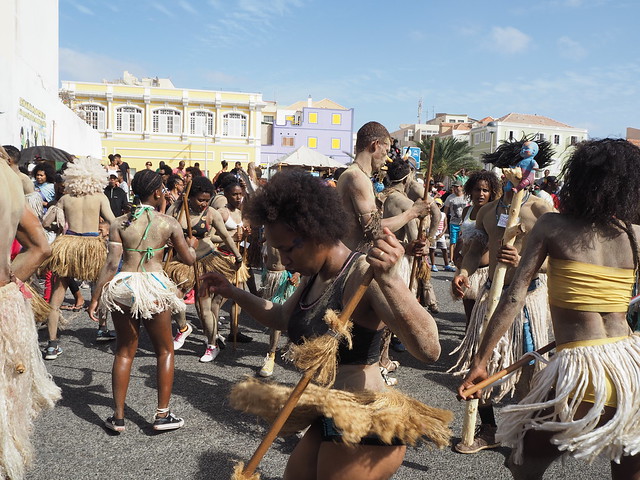
‘Mandinga’, Mindelo Carnival
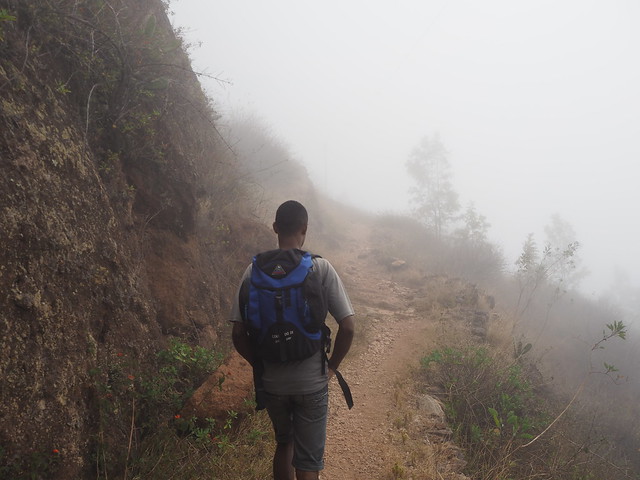
Hiking from Cova Crater with Edison
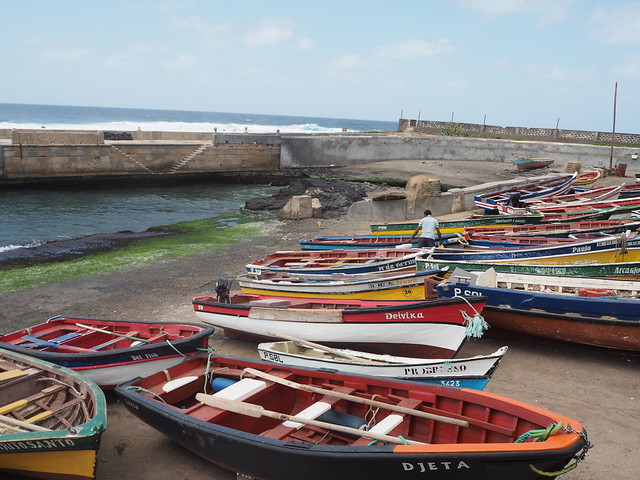
Boats at Ponta do Sol
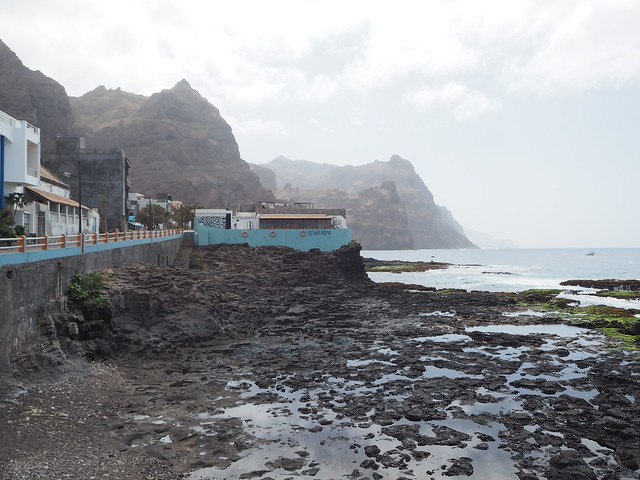
Looking west from Ponta do Sol
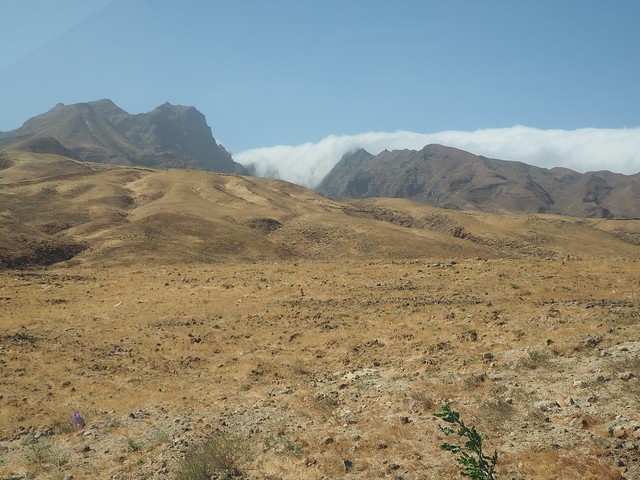
Clouds on the volcano
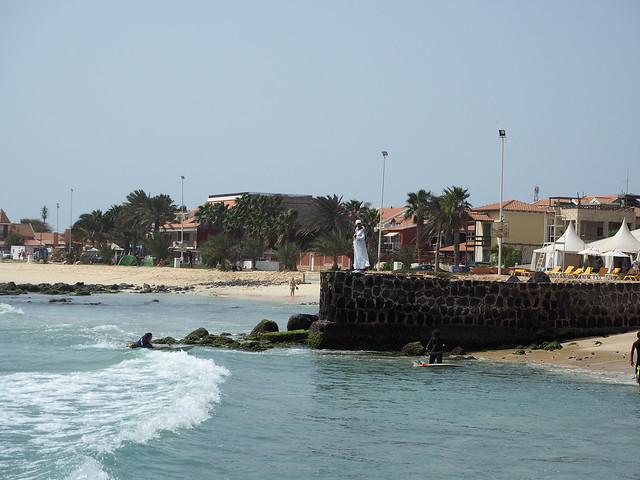
Mystery white-clad woman on the pier, Santa Maria
Big Walk Sunday
(First in an extremely occasional series.)
What to do when you’re feeling out of sorts: get out of doors, yomp through fields, look at green things, distract your tedious internal monologue with beautiful views and how much your legs hurt.
One of the things on my Bucket List*, or Life List, or whatever, is to walk Offa’s Dyke, a 177 mile path that more or less follows the England / Wales border, roughly following the site of some ancient Anglo-Saxon earthworks erected by Offa of Mercia to keep out marauding Celts. Conveniently enough the path goes right past my parents’ house in Monmouth, and so yesterday morning, optimistic and foolishly unprepared, I lit out for Pandy, 16 miles away across the hills. IT WAS GREAT.
Things that happened on my walk:
- I was so poorly prepared that I didn’t even bring water (sure there’ll be a shop on the way, I thought. Reader, there was not a shop on the way), which resulted in me drinking from streams and at one particularly low point, a trough in a field. However it’s now 24 hours later and I don’t appear to have cholera.
- Shortly before halfway, I was feeling particularly delighted by my progress and the swing in my step, whereupon almost instantly I tripped over my own feet and fell right onto my knees in the road, tearing my leggings and skinning and bruising my knees (and also coming within inches of knocking myself out). In some ways this was less than ideal, but it did allow me to stagger the rest of the way being very impressed at my own hardcoreness. (I also did not have the stomach to look at my own wounds, and so WhatsApped a blurry photo of my bleeding knees to Nine (in Malaysia) and Clare (in Mongolia), who had to take me firmly in hand when we were on holiday in Georgia in 2011 and I sliced open my knee on falling over on a bridge made of knives: despite my mildly hysterical insistence that I could slap some savlon and a band-aid on it and it’d be fine, they both insisted that it was not fine and summoned a policeman who summoned an ambulance who summoned a policewoman on a segway (? – I may have confused the order of events there) and I was taken to hospital to VERY BRAVELY have my knee stitched up with no anaesthetic. Anyway Nine and Clare’s very scientific internet diagnosis was that it was probably fine and so I staggered stalwartly on.
- I was menaced by sheep! Normally on walks I am wary of cows, just because they are very large and could probably do you a bit of damage just by leaning on you, even if they didn’t mean it – however this was the first time I had encountered sheep that didn’t flee in fear but instead RAN TOWARDS YOU shouting aggressively. I stood my ground and they stood theirs and I was permitted to pass through their field unmolested, no doubt because they sensed my relatively recent return to vegetarianism but I have no doubt that were I still a carnivore they would have butted me to death.
- I passed a whole load of austerely picturesque country churches, including one in Llanvihangel-Ystern-Llewern that was clearly well-attended for Sunday services, organ music emanating from within, cars parked along the road outside and people roaming the churchyard, leaving flowers on graves. From my heathen citydweller perspective it’s easy to forget that quite a lot of people in this country still take their religion seriously, in a quiet and quotidian way.
- I passed a castle! White Castle in fact, which boasts connection to two of my favourite historical-figures-as-represented-by-literature, i.e. John of Gaunt (thanks to Anya Seton’s Katherine, I imprinted on him at a young age) and Owain Glyndŵr (who features centrally, albeit deadly, in Maggie Stiefvater‘s Raven Cycle). Less heroically, Rudolf Hess apparently used to go and hang out there painting and sketching while awaiting trial.
- Two miles before the end of the route, I suffered a brief sense of humour failure when Offa insisted I get offa** the nice path I was on and instead haul my weary and bleeding and parched body up a massive hill. HOWEVER! At the top of the hill there was the village of Llangattock Lingoed, and in that village there was a very decent pub, and in that very decent pub there was a pint of soda water and lime, which I promptly inhaled, AND ALSO a friend of my aunt’s whom I had probably not seen for about fifteen years, conjured up as if by magic. The universe is very tricksy sometimes. Both the drink and a shouty conversation about Brexit and Trump were sufficiently reviving to make the remaining two miles to Pandy a relative breeze.
 Jessica Gregson's blog